
LogiMAT 2026: when intralogistics becomes a connected intelligent system
Date: May 15, 2026, Asseco CEIT
At the LogiMAT 2026 trade fair, we as Asseco CEIT together with our strategic partner Tuskrobots Europe presented the vision for the direction of modern intralogistics.
It has long since ceased to be just about individual robots or automated devices – it is moving towards fully connected systems where data, real-time control, and the ability to flexibly respond to operational dynamics play a key role.
In this context, the main focus of our presentation was the Twiserion platform, which integrates RTLS technology, digital twin, and AGV/AMR fleet management into a single entity. Its goal is to provide not only an overview of real-time events but also the ability to actively intervene in processes and optimize them across the entire logistics chain.
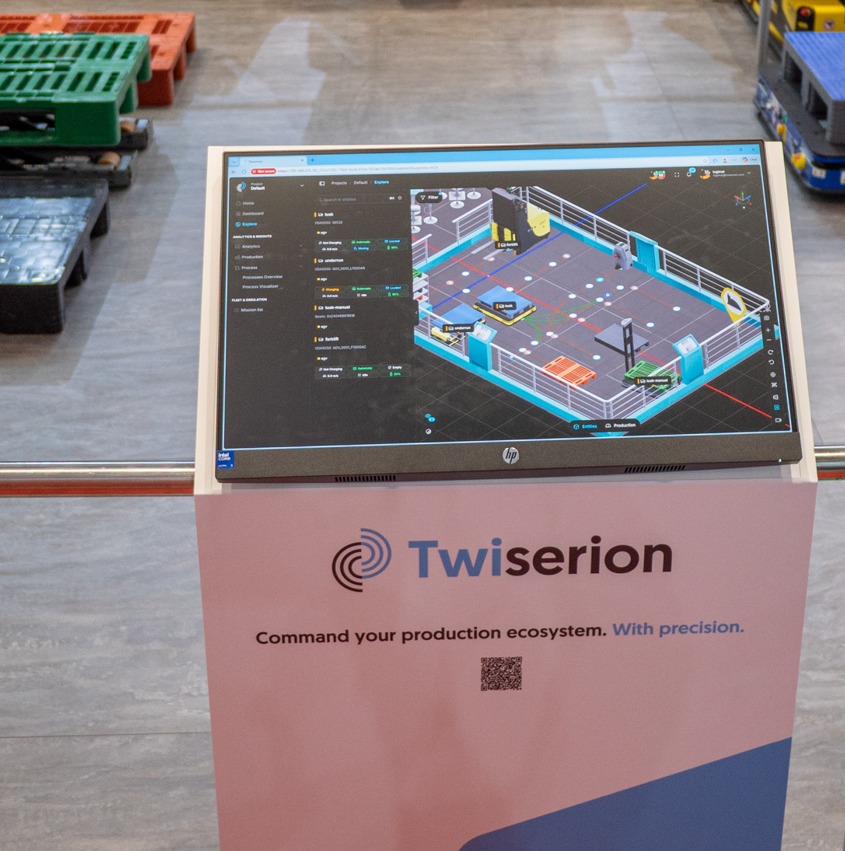
Twiserion as the foundation of digitally controlled operations
We introduced Twiserion at LogiMAT 2026 as the digital foundation of the future of intralogistics. Its strength lies in connecting multiple layers of reality – the physical movement of material, fleet management, and the digital model of operations.
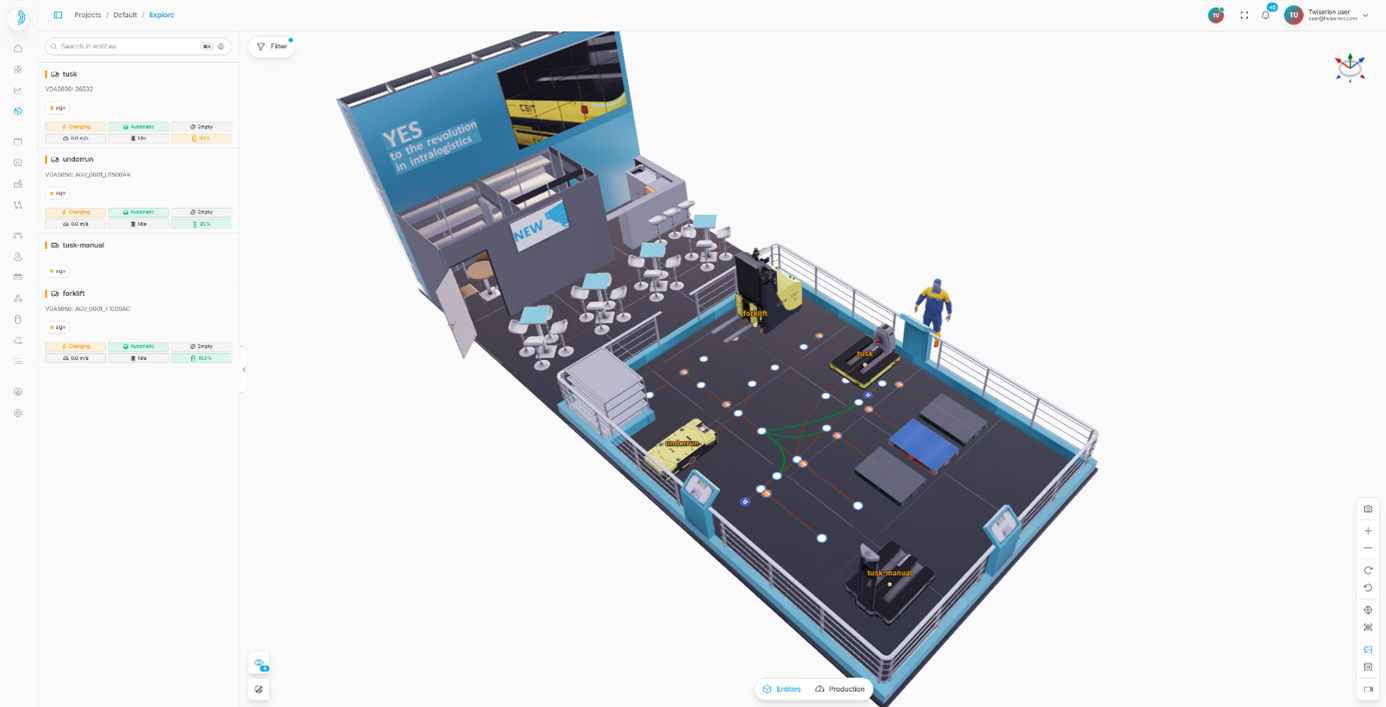
Digital model of Asseco CEIT solutions presented at the LogiMat 2026 trade fair within the Twiserion platform environment
The entire concept is based on creating a digital environment that faithfully reflects real operations. It defines layout, zones, objects, and decision points, creating an accurate digital image of the system. This foundation is followed by control logic – from fleet management rules to responses to various situations, alarms, or status changes.
An important part is also the outputs in the form of visualizations and dashboards that transform raw data into understandable overviews. Operators and management thus have real-time insight into performance, process status, bottlenecks, and the development of individual material flows.
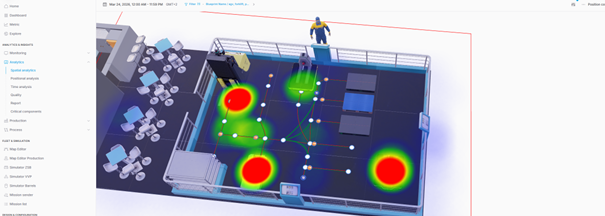
Analytical display of bottlenecks directly in the digital model environment allows identification of critical operational points where AGV/AMR remained for an unreasonably long time. These places represent potential obstacles to material flow and at the same time the greatest room for optimizing the logistics process.
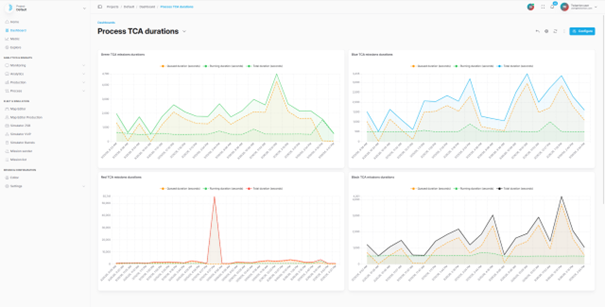
One of several available dashboards in the Twiserion platform environment prepared for the LogiMat 2026 trade fair visualizes individual missions (transports) of AGV/AMR, specifically the duration of individual monitored mission segments within the selected time interval. Users can create such dashboards independently from available parameters and metrics depending on the type of output or analysis they prefer.
Digital Twin as a Living Picture of Reality
It is not a static model, but an environment where every fleet movement, every mission, and every interaction with the RTLS system is instantly reflected in the digital space. This makes it possible not only to monitor the current status, but also to better understand the connections between individual events.
The ability to connect the physical and digital worlds gives both operators and management a new level of insight into how the entire system works. The outputs include movement heatmaps, route analyses, detailed tracking of idle time, speeds, distances, potential collisions, and more.
The goal is not only reporting, but above all supporting better decision-making and process optimisation.
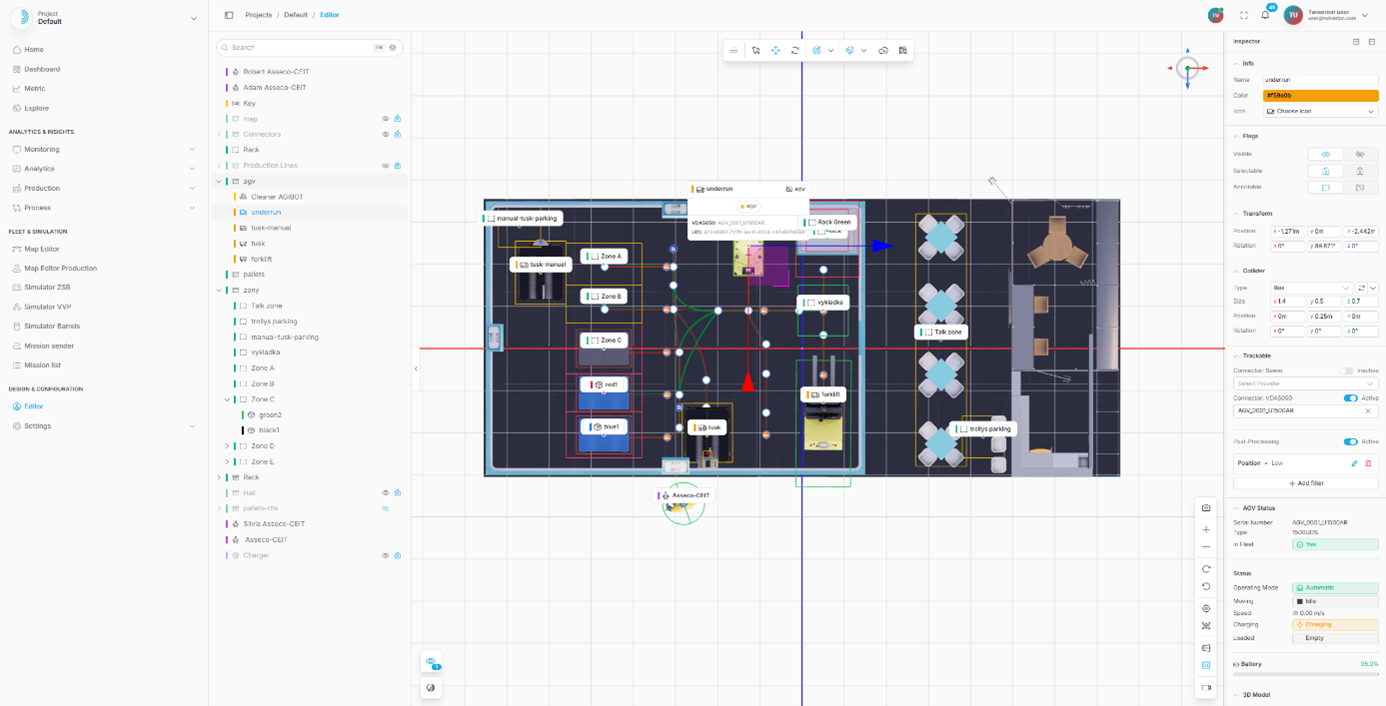
Digital model of real operations in the Twiserion platform environment with the possibility of individual setting of process entities according to customer requirements (“on demand”). The display captures the digital environment in edit mode in an orthographic top view.
LogiMAT showcase: from design to analysis
The presentation also included a “live” demonstration of working with Twiserion. We showed visitors a specific intralogistics scenario. Four types of pallets (distinguished by color) were placed on a rack and four types of pallets (distinguished by color) were placed on the floor.
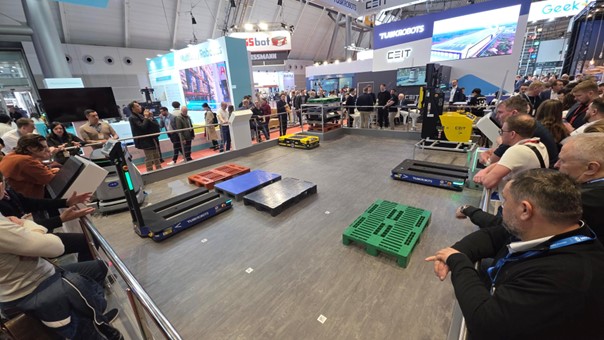

Asseco CEIT’s booth at LogiMAT 2026. The exhibition featured live demonstrations of fleet management, visualisations of logistics processes, and real-time analytical dashboards.
We designed a demonstration of an intelligent solution consisting of two interconnected processes that together ensure efficient and reliable handling of pallets in a modern industrial environment. The main process focused on automated transferring of pallets of the same color between the rack system and the floor (rack ↔ floor). Each mission was designed to be completed without the possibility of interruption. The result of the transport was that the pallets were exchanged. The order of missions was set according to the FIFO principle. The secondary process expanded the overall view of reliable pallet handling and their transport to a defined position; it focused on transferring pallets using an autonomous mobile robot (AMR). The control is simple and intuitive – mission start is done directly via the device display, allowing quick adaptation to current production requirements.
We also showed visitors flexibility in the form of priority missions that allow immediate response to current operational needs. Their activation was done through a graphical interface installed on a PC located directly on site, with operator presence verified using RTLS technology in defined virtual zones.
In weekend operation mode, the solution intelligently optimized its activity – it completed ongoing tasks but did not accept new ones.
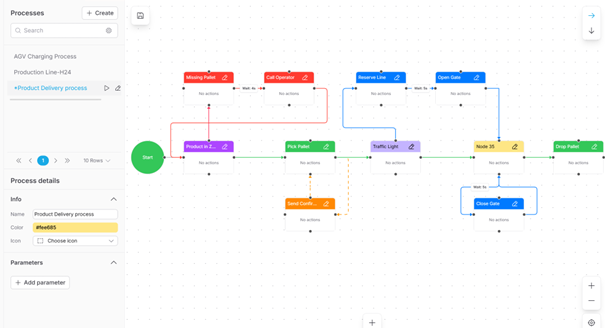
Setting the complete control logic directly in the Twiserion platform environment. The control logic is based on the development diagram of the Process Designer tool. The process is divided into two levels – the higher level of the logistics process is defined in the Process Designer diagram, which connects the specific implementation of the lower control level realized in the Behavior Designer tool in C# language. For each process, it is also possible to define notifications or other subsequent actions.
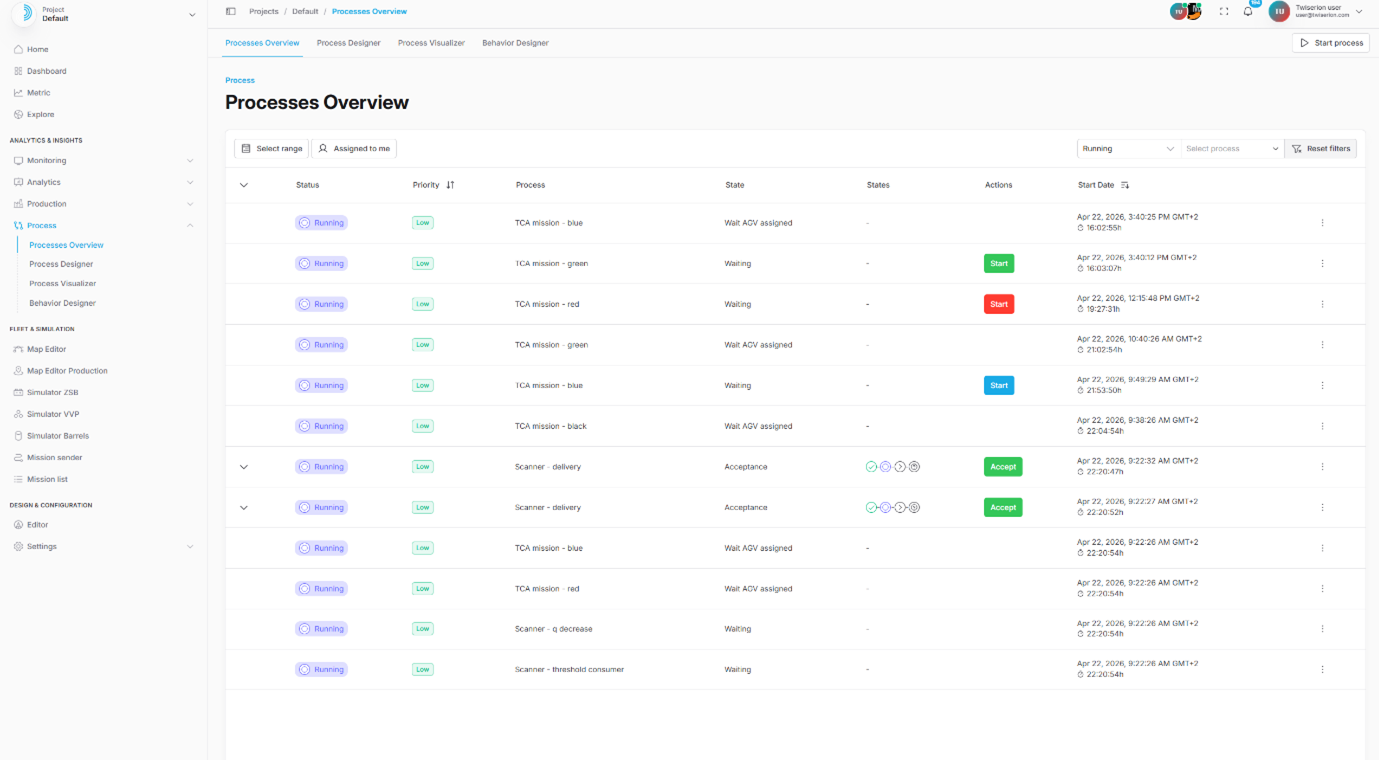
Overview of currently running processes including history in the Twiserion platform environment along with the possibility to monitor and visualize the status of mission execution, their starts, priority settings for individual missions, mission start times, and other operational parameters. The interface also includes Action buttons allowing quick user intervention in the process and operational system management.
In conclusion
The feedback on our “live” demonstration was great; trade fair visitors had many questions. The greatest attention was especially drawn to the integration of the exhibited software and hardware and their mutual cooperation in real time. Visitors also appreciated the idea that the customer can manage the entire system to some extent independently, which significantly increases its flexibility and independence.
Twiserion also stood out compared to the competition – mainly thanks to the use of a 3D environment, multitenant architecture, and fully web-based access, which allows easy availability. We also attracted attention from major industry players including representatives from VW Wolfsburg, as well as companies specializing in AGV technologies, who showed interest in cooperation especially in the area of control and its integration.
LogiMAT 2026 was about confirming that what we develop and test at home also has its place on the international stage. The presented solution confirmed its potential as a modern, user-oriented platform for intralogistics automation. The positive response from the trade fair, including interest from major industry players, confirms that this direction is the right path. The solution represents a strong foundation for further development, expansion of functionalities, and building partnerships in the field of intelligent automation.