
What Does a Noise Reduction Project Look Like, from the Initial Measurement to Guaranteed Results?
Interview with Filip Hanker, Director of the Noise Reduction Division at Asseco CEIT
Žilina, Slovakia. August 4, 2026
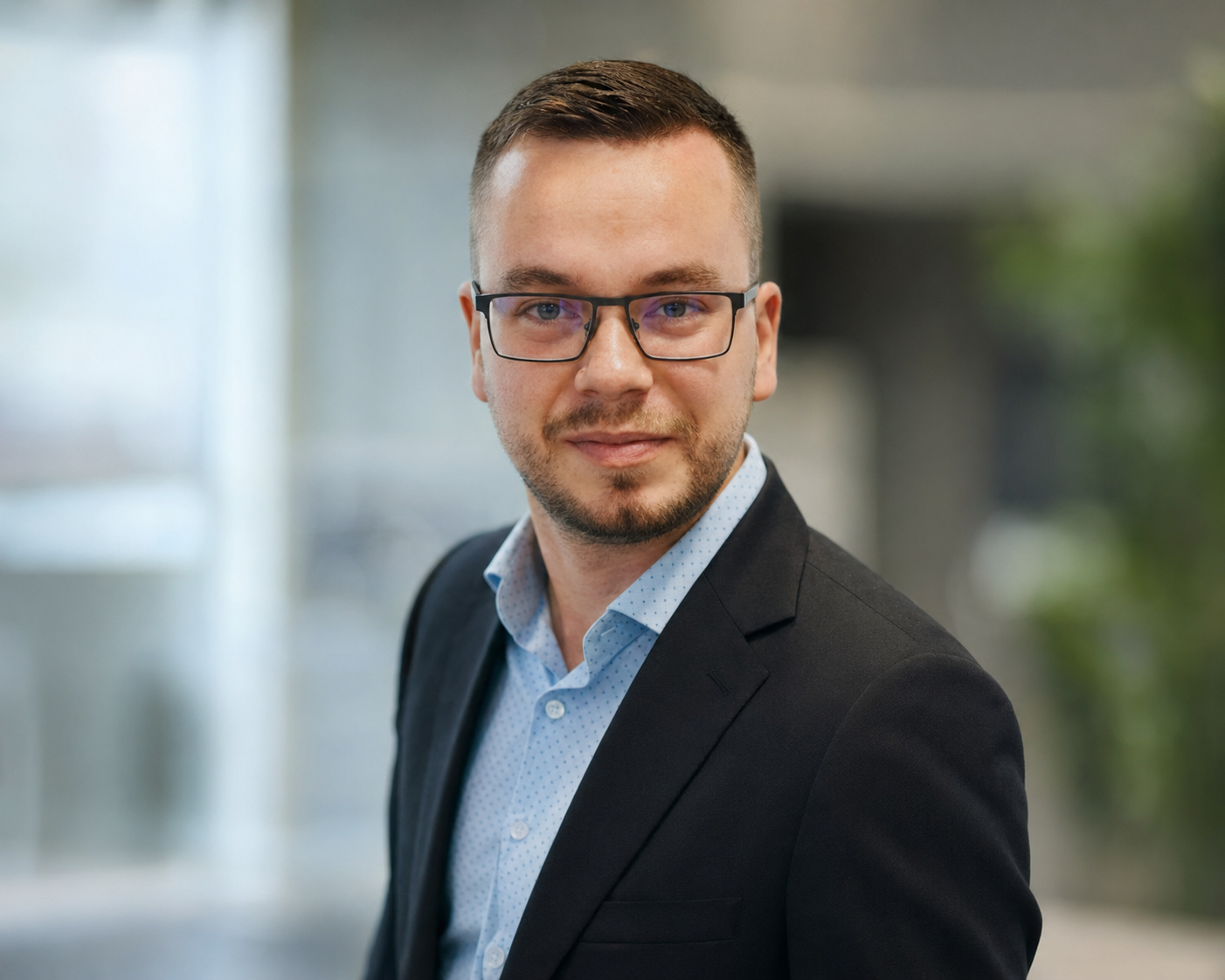
Filip, when a company contacts you for the first time, what do you usually learn during that initial conversation?
I usually hear one of three things: “We have an audit coming up and need to resolve this quickly,” or “Our employees are complaining and we don’t know what to do about it,” or “We want to look into it before the situation gets worse.” Each of these situations is different, but the initial conversation always has the same goal—to understand what we are dealing with. I ask about the type of operation, the machinery they use, how many employees are exposed, and whether any measurements have already been taken. Based on this information, we can estimate the scope and recommend the next steps.
What follows this initial conversation? When do you visit the facility in person?
Usually very soon—ideally within one or two weeks of the initial contact. Before the visit, we request any available basic documentation, such as facility layout drawings, a list of machinery, and any previous noise measurements. This helps us arrive prepared. The first visit itself combines a site inspection with an initial assessment—we walk through the facility, listen, observe where people work, examine how the machinery is arranged, and identify critical areas. It is like detective work—we look for clues before taking out our measuring instruments.
How is the noise measurement itself carried out? What exactly do you do, and how long does it take?
We take measurements using certified equipment under actual operating conditions—that means during full production, not when the machines are idle. This is crucial because the noise in an empty production hall is entirely different from the noise during a regular shift. We measure noise levels at employees’ workstations as well as in various areas throughout the facility. The result is an acoustic map—a clear visualization showing where noise levels are highest, where the noise originates, and which frequencies dominate. The duration of the measurement depends on the size of the facility, ranging from a few hours to an entire working day.
You mentioned an acoustic camera—how do you use it during the diagnostic process?
An acoustic camera is a tool that significantly reduces diagnostic time and improves accuracy. It combines a microphone array with visual imaging—in real time, you can see a color-coded sound map superimposed directly onto an image of the facility. You can immediately identify the specific machine component causing the problem—whether it is the gearbox, fan, hydraulic system, or something else. Without an acoustic camera, we would have to test individual sources one by one, which takes considerably more time. With the camera, we can identify them within minutes. For clients, this is always a major “aha moment”—for the first time, they can actually see where their noise is coming from.
What follows the analysis? How do you design a specific solution?
After the analysis, we prepare a technical report containing the measurement results, the identified noise sources, and proposed solutions, together with the estimated impact of each measure. We always design solutions according to a clear hierarchy—first, we try to eliminate noise directly at the source, as this is the most effective approach. This may involve modifying the machine, isolating vibrations, replacing worn components, or optimizing the process. If that is not sufficient, we move on to solutions targeting the noise transmission path, such as acoustic enclosures, barriers, and sound-absorbing materials. Each proposed measure has a defined expected impact in decibels and an estimated cost.
How do you involve the client in the process—can they influence the proposed solution?
Absolutely—and that is very important to us. The technical report and its proposed solutions always serve as the basis for a joint discussion, not as a final verdict. The client knows their operation better than we do—they know what is technically feasible, what operational constraints exist, and what plans they have for expansion or renovation. This information has a significant impact on the choice of solution. For example, if we know that a machine will be replaced within a year, it makes no sense to invest in costly modifications—we address the issue in a different way. The final proposal is always the result of mutual agreement, not a unilateral decision.
How do you ensure that implementing the solution disrupts production as little as possible?
This is one of the issues we address from the very beginning—not at the end. As early as the solution design stage, we consider how it can be implemented with minimal impact on production. Most of the work can be scheduled during planned shutdowns, weekends, or night shifts. If interrupting production is unavoidable, we define a precise schedule in advance so that the client can incorporate it into their planning. In addition, we design all our solutions to ensure they do not restrict access to machinery for routine maintenance, interfere with ventilation, or compromise workplace safety. We solve the noise problem, but not at the cost of creating new ones.
What happens if you encounter an unexpected problem or complication during implementation?
It does happen—manufacturing is a complex environment, and not everything can always be predicted. For example, a secondary issue that was not apparent during the analysis may emerge once the primary noise source has been addressed. In such cases, we communicate with the client immediately and transparently and propose a solution. We never hide complications or make excuses. Precisely because we take responsibility for the results, we are motivated to resolve these situations quickly and properly—not overlook them. The client’s trust is more valuable to us than cutting costs at the expense of quality.
“Don’t start with the price—start with the actual situation.
Until you know what is really happening in your facility, every figure is only an estimate.”
When and how are the results verified?
Once implementation is complete, we take final measurements using the same methodology as in the initial analysis—during full production, at the same locations, and with the same certified instruments. We compare the results with the original conditions and the defined targets. The client receives a final report documenting the noise reduction achieved at each measurement location. This report can also be used for internal audits, regulatory documentation, or communication with inspection authorities. Simply put—you have the results in black and white.
What happens if the agreed results are not achieved?
In that case, we remain on site until the problem is resolved. This is not just a phrase—it is part of our commitment to the client. If the measurements show that we have not achieved the agreed targets, we analyze the cause and propose additional measures. The client does not pay for effort—they pay for results. This is precisely what distinguishes a truly responsible approach from standard consulting, where the consultant leaves after delivering a report and the client is left to achieve the results. We guarantee the results and act accordingly.
What does a typical project timeline look like—from initial contact to the final report?
For a simpler project, the process usually looks like this: initial contact and an introductory discussion, followed by a site visit and measurements within two weeks, then a technical report with proposed solutions within another week. This is followed by a joint discussion and approval of the solution, and then implementation—which can take anywhere from a few days to several weeks, depending on the scope. Finally, we conduct the final measurements and prepare the final report. For complex projects in large facilities with multiple noise sources, the entire process may take several months. However, we always aim to provide a clear and specific schedule—the client needs to know what to expect and when.
Do you also work with other suppliers or subcontractors, or is everything handled in-house?
We carry out most of the work using our own in-house resources, which gives us control over quality and scheduling. For specialized structural components—such as custom-made acoustic enclosures—we work with trusted partners. However, the client always communicates directly with us, has a single point of contact, and we take responsibility for the entire project, including all subcontracted work. “That is our supplier’s problem” is simply not something you will hear from us.
Does your approach differ for small businesses and large corporations?
The methodology is the same—measurement, analysis, design, implementation, and verification. What differs is the scope, pace, and style of communication. In a large corporation, there are usually more stakeholders, a more formal approval process, and a greater emphasis on documentation. In a smaller company, decisions are made more quickly, but the owner or manager needs to see a clear return on investment because every cent counts. In both cases, our goal is the same—to deliver measurable results at a reasonable cost. And we enjoy the fact that we work with both automotive manufacturers and engineering workshops with just fifty employees.
Do you also provide long-term support after the project is completed?
Yes, and it is something that more and more clients appreciate. Noise is not a static problem—facilities change, machinery wears out, and new production lines are added. That is why we also offer regular follow-up measurements, which help maintain the results achieved and identify new issues before they become critical. It is essentially preventive acoustic maintenance—the same principle as preventive machinery maintenance. Companies that take this approach face far fewer surprises and significantly lower costs when addressing future problems.
What advice would you give a company deciding whether to address its noise problem—and how to get started?
I would say: do not start with the price; start with the current situation. Until you know what is actually happening in your facility, any figure is merely an estimate. That is precisely why we created the Noise Risk Calculator—in just a few minutes, it will give you an initial idea of where you stand. If you want to explore the issue in greater depth, your first consultation with us is free and comes with no obligation. Our specialists, who deal with these issues every day, will visit your facility, assess the situation, and tell you exactly what they see. No sales pressure, no unnecessary complications—just the facts and a specific proposal for the next steps.